
Featured Case Study
Building a Curated Online Literature Review (Student-facing Resource) with AI in Under an Hour
Built in under an hour. The speed is not the point — the resource is.
Overview
When AI Becomes a Scholarly Collaborator
What does it look like when an instructional designer stops treating AI as a production shortcut and starts treating it as a scholarly collaborator? This case study documents the creation of Designing for Restoration — a curated online literature review that synthesizes nine peer-reviewed and institutional sources on trauma-informed pedagogy, SDA educational philosophy, and Universal Design for Learning into a single, navigable student resource. It was built in under an hour. The speed is not the point. The resource is.
The Problem
A fragmented research landscape
Neurobiological frameworks live in one place. Faith-based applications in another. UDL principles somewhere else entirely. Instructors at research-intensive institutions like Andrews University spend significant time curating these threads for their students — time that could be spent teaching.
What if that curation could be done in an hour, and the result was something students could actually use?
The Artifact
A curated online literature review
Designing for Restoration is not a course. It is a new category of student-facing resource — structured, cognitively paced, and grounded in nine peer-reviewed sources. Every claim is anchored to scholarship. The visual architecture follows trauma-informed principles of cognitive ease and grace-based accessibility.
The Tools & the Process
From Concept to Live Resource in Under an Hour
Four AI collaborators, each assigned the role it does best — curation, architecture, translation, and publication.
Step 01
Curate the sources
Nine scholarly sources uploaded to NotebookLM — ensuring every claim traces to peer-reviewed research, not AI inference.
Tool: NotebookLM
Step 02
Develop the architectural intent
Using Gemini as a senior web architect, the content was mapped into a “trauma-informed” visual hierarchy that prioritizes cognitive ease and pacing.
Tool: Gemini
Step 03
Translate the architecture
Claude converted the content structure into hand-coded, accessible HTML — no template, no drag-and-drop builder.
Tool: Claude
Step 04
Publish the resource
Concept to live, cited, navigable literature review in under one hour.
Result: live site
The Iterations
Three Evolutions, Fifteen Minutes
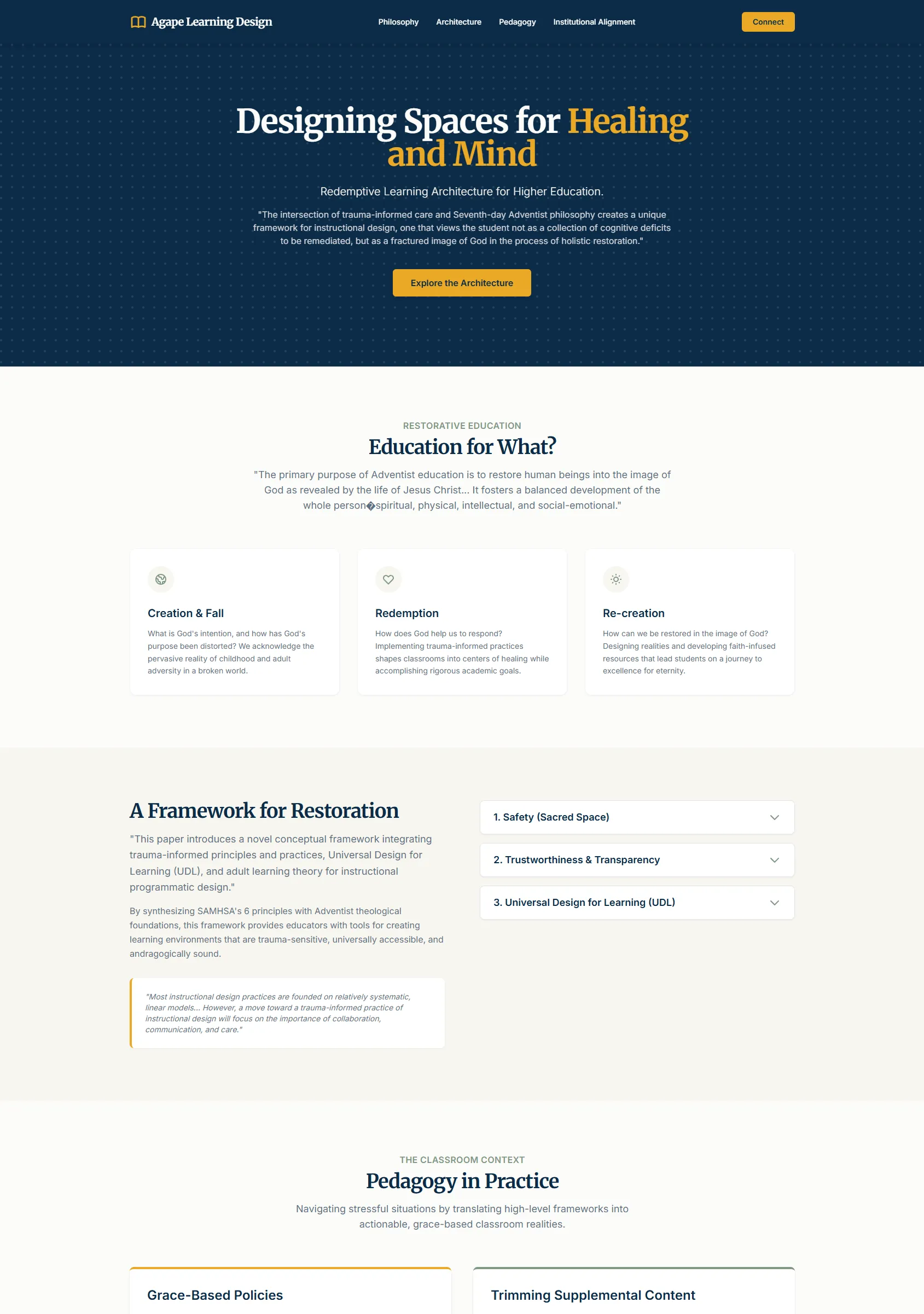
Iteration 1
Clean Academic - light mode
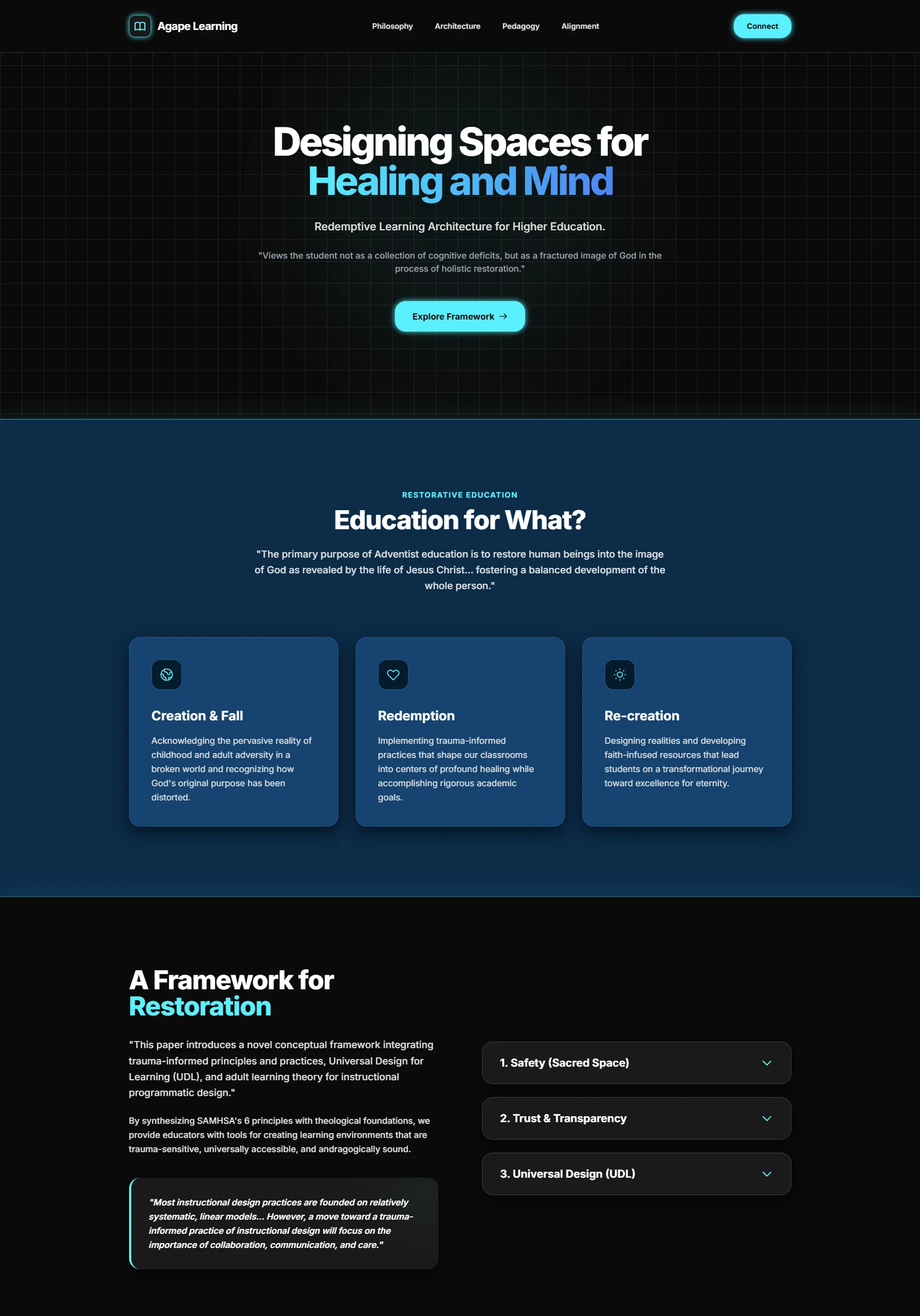
Iteration 2
Modern Dark — neon blue accents
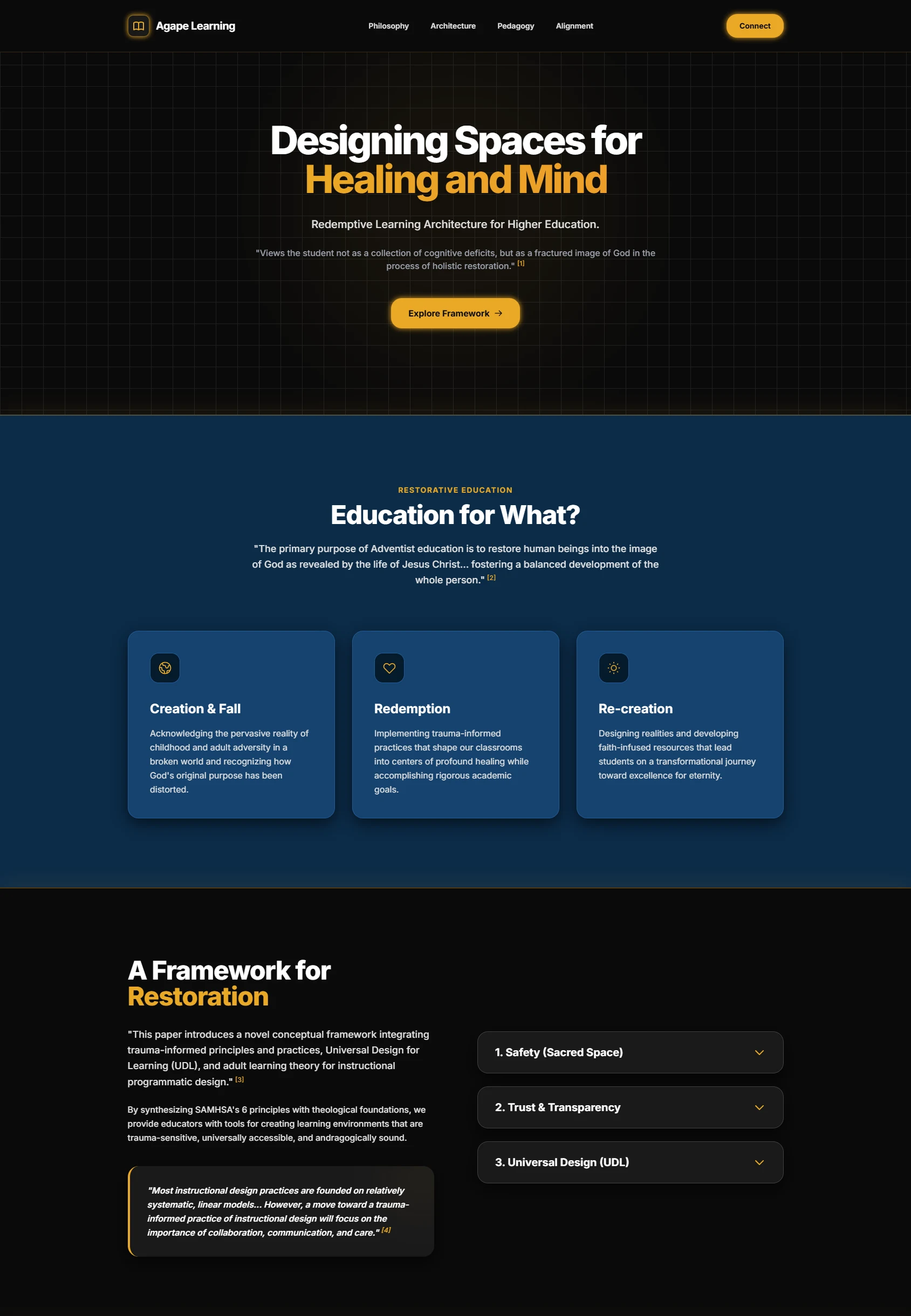
Iteration 3 (Final)
Modern Dark — gold accents
Three design evolutions completed in under 15 minutes — each driven by instructional-design judgment, not template selection.
Explore the Resource
Visit the Resource
The living version of Designing for Restoration opens in a new tab.